If you’re experiencing foot, heel, ankle, knee, or lower-limb pain, you may be considering whether custom orthotics could help. Before making that decision, it’s completely normal to wonder what actually happens during an assessment. At Kelowna Premium Orthotics, my goal is to make your visit relaxed, informative, and completely tailored to your needs. Here’s a clear look at what you can expect during your appointment.Your assessment begins with a friendly conversation about your symptoms and your lifestyle. We’ll talk about where you’re feeling discomfort, how long it’s been affecting you, and whether certain activities or footwear tend to make it better or worse. This is also when I learn more about your lifestyle, occupation (related to standing hours), daily habits, and any sports or hobbies you participate in. Also discussed, will be previous injuries, health risk factors and gain insight on what treatments that have helped or not.
Next, we review your footwear. Shoes reveal a lot about how your feet function, and examining them helps identify patterns such as uneven wear or lack of proper support. Whether it’s work shoes, runners, or everyday sneakers, the pair you wear most often can provide valuable clues about what might be contributing to your pain. Bringing your main footwear options to the appointment ensures a more accurate assessment.
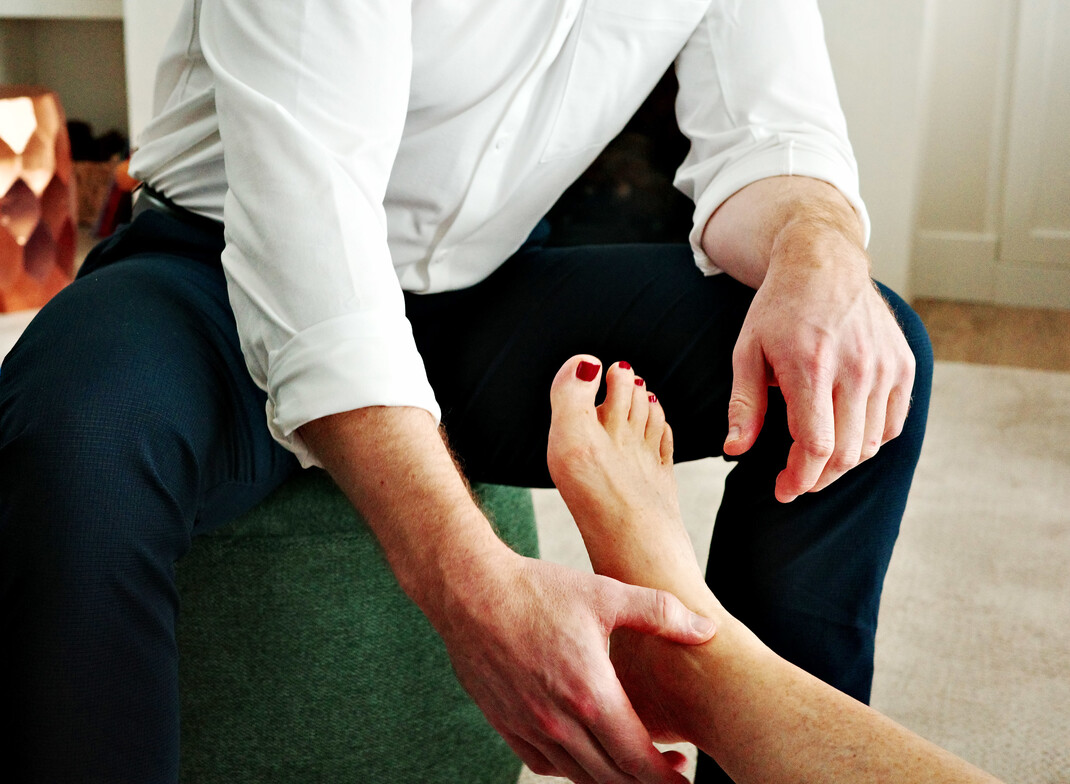
After the conversation and footwear review, we move into the biomechanical examination. This hands-on portion includes assessing your foot structure, arch height, joint mobility, strength, flexibility, and any points of tenderness. By evaluating how your feet, ankles, knees, and even hips move, we can pinpoint the true source of your discomfort rather than just treating the symptoms.
From there, we transition into a gait analysis. This involves watching you walk and occasionally run on our treadmill, to understand how your body moves during each step. Your gait can reveal issues such as overpronation, supination, imbalances between your left and right side, or excessive pressure on certain parts of the foot. This step plays a crucial role in determining whether custom foot orthotics will be beneficial and what design features they should include.
Once the assessment is complete, we take time to go through the results together. I explain what’s causing your pain, why the issue likely developed, and what the findings from your exam mean in simple, easy-to-understand terms. Education is an important part of the appointment, and my goal is always for you to leave feeling confident and informed, not overwhelmed.
From there, we create your personalized treatment plan. Depending on your condition, this may involve custom foot orthotics, footwear recommendations, strengthening exercises, stretching routines, activity modifications, or strategies to manage discomfort. Custom foot orthotics are only recommended when they are truly necessary and will provide meaningful improvement to your symptoms and daily comfort.
If custom foot orthotics are part of your plan and you choose to proceed, we then capture an exact model of your feet using the foam box casting method. Another common method is 3D digital scanning and both methods create a highly accurate representation of your foot structure, allowing your custom foot orthotics to be made with precision and tailored specifically to your needs, lifestyle, and activities.
Before you leave, we review what to expect next. You’ll have a clear understanding of when your orthotics will be ready, how to break them in properly, what you may feel during the adjustment period, and when to schedule your follow-up appointment. Ongoing support is part of the process, and your comfort and long-term results always remain the priority.
Sam Biggs
Contact Me


.png)